
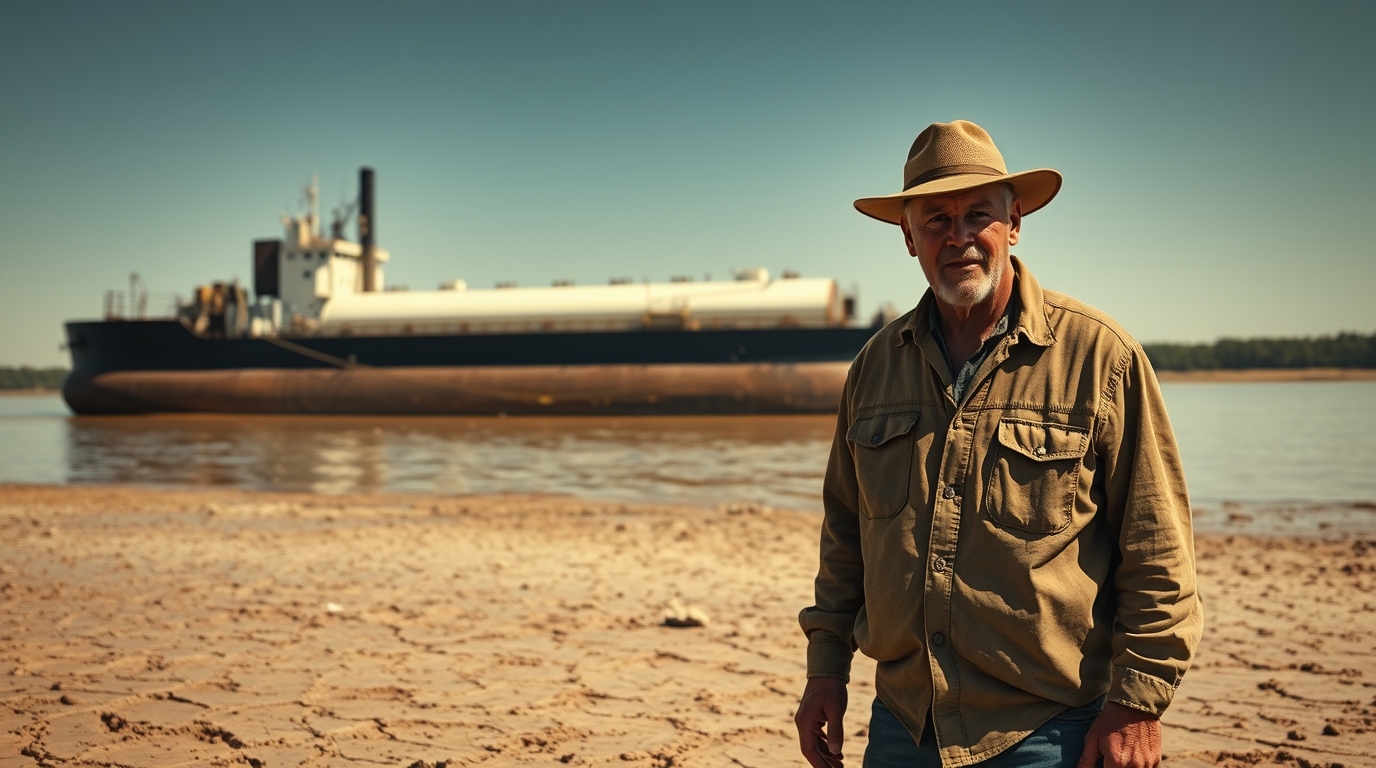
Mississippi River drought actively destroys your spring planting budget across the Corn Belt this morning. Massive fertilizer barges are completely stalled out in the mud south of Illinois. If you rely on cheap imported nitrogen arriving by water to grow 250 bushels of corn, your break-even point is officially dead. This massive logistical market-crash forces independent operators to scramble for alternative supply chains right now.
The break-even reality of the Mississippi River drought
You cannot cash flow a high-yield corn crop when anhydrous ammonia prices aggressively spike past $1,050 overnight. Low water levels force barge operators to drastically cut their tonnage, creating an absolute yield-killer for northern terminals. Desperate farmers are watching their local cooperatives ration remaining supply just weeks before the planters need to roll. Following our recent report on how Florida officially banned lab-grown meat to protect cattle ranchers, this supply shock proves global logistics are failing.
The physical logistics of keeping the river channel open involve massive amounts of federal red tape. According to the U.S. Army Corps of Engineers (USACE), emergency dredging operations are struggling to maintain a nine-foot draft for commercial traffic. Watching millions of gallons of essential liquid fertilizer sit trapped hundreds of miles away completely destroys your cash-rent margins. You still owe the bank for your seasonal operating loan even if your tanks remain bone dry.
Navigating red tape and CME corn basis pressure
This unprecedented Mississippi River drought forces massive structural shifts in how you secure crop nutrients. You cannot negotiate with a dry riverbed or a stalled towboat captain. You must ruthlessly lock in your local nitrogen supply today before terminal managers violently widen your fall harvest basis.
Stagnant CME Group Corn futures hovering near $4.40 per bushel offer absolutely zero margin to absorb these predatory fertilizer premiums. Protect your operational equity from this massive infrastructure failure by exploring direct rail purchasing programs immediately. Secure your inputs now before this logistical nightmare completely steals your generational harvest.