
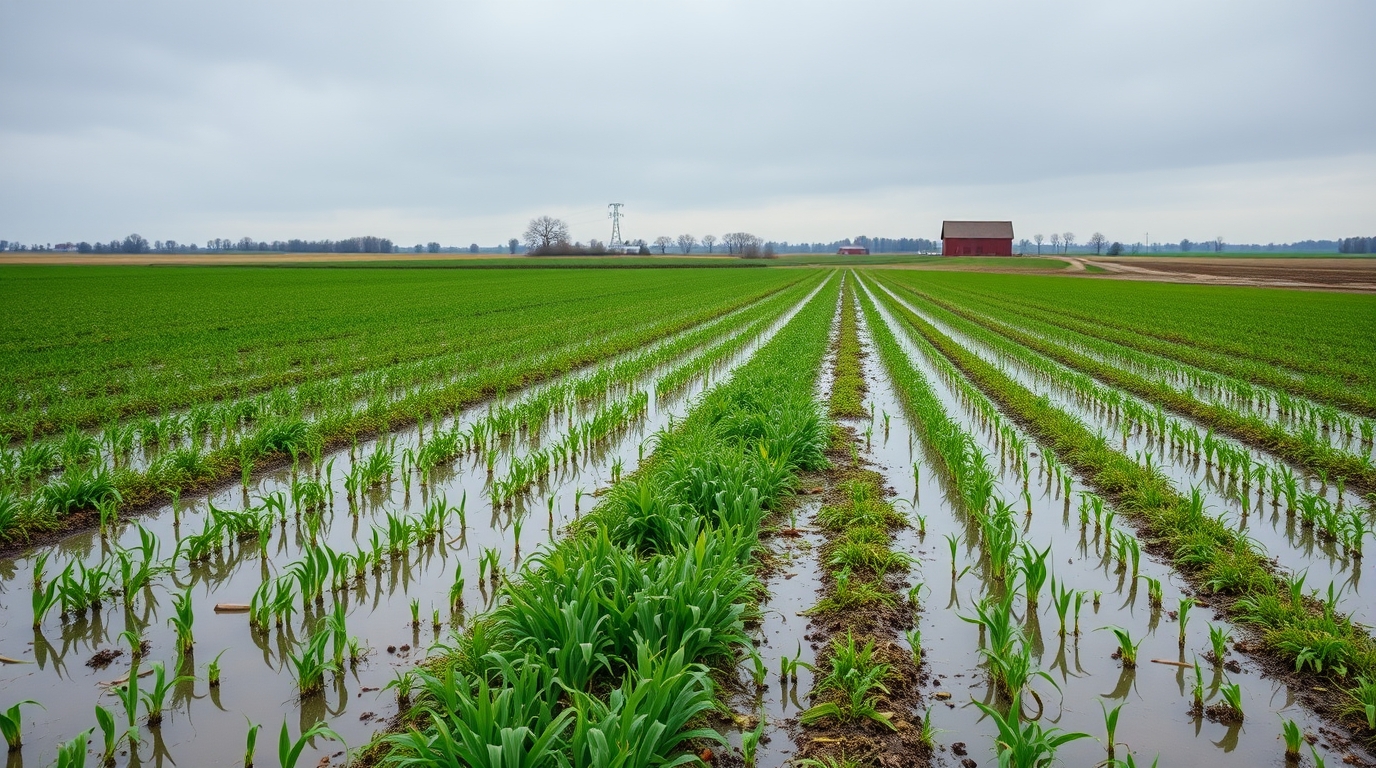
Farmers in part of Indiana just got access to federal disaster help after months of punishing rain left operations under pressure. USDA said the designation opens emergency loan options for producers in seven counties, giving them another tool to recover before the 2026 growing season moves much further ahead.
For many farms, that kind of help can matter more than it sounds at first glance. When fields stay soaked for too long, the damage does not stop at planting delays. It can affect machinery, livestock plans, cash flow, and the basic rhythm of the whole farm.
Why USDA designated these Indiana counties?
According to the USDA Farm Service Agency, Jennings County was named the primary natural disaster area after significant rain stretched from April 1, 2025, through December 31, 2025. Six neighboring counties also became eligible for assistance because they border the main disaster zone.
Those counties are Bartholomew, Decatur, Jackson, Jefferson, Ripley, and Scott. In practical terms, that means more farmers across southeastern Indiana may now qualify for federal recovery credit instead of just those in one county.
What the emergency loans can be used for?
USDA said the emergency loans can help producers replace essential items such as equipment or livestock, reorganize farm operations, or refinance certain debts. That may sound like paperwork, but for farms under stress, it can be the difference between stabilizing and falling further behind.
Also, these loans are not automatic. The Farm Service Agency said each application will be reviewed based on the extent of losses, available security, and repayment ability, so farmers still need to document the impact carefully.
What farmers should do next
The application deadline is October 13, 2026, which gives producers time, but not forever. And that matters because disaster recovery on a farm usually comes in layers, not all at once.
USDA is also pointing producers to its farmers.gov resources, including disaster assistance tools and local service centers. At the end of the day, what this designation really does is buy struggling farms a bit of breathing room while they figure out the next move.
The main press release has been published by the USDA Farm Service Agency.