
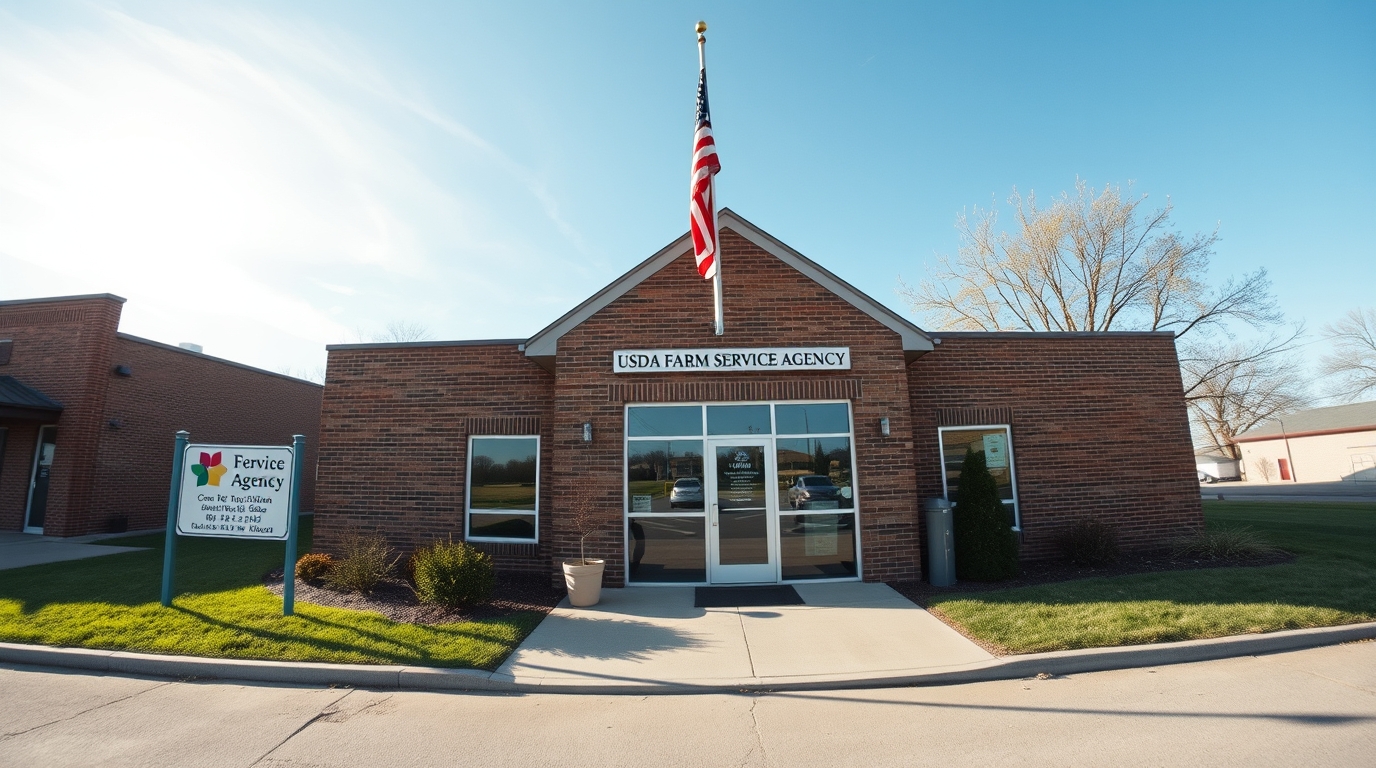
The USDA SDRP deadline April 2026 is April 30. Both Stage 1 and Stage 2 of the Supplemental Disaster Relief Program close on that date. The program provides more than $16 billion in disaster relief under the American Relief Act, 2025, for producers who experienced crop, tree, bush, or vine losses from qualifying disaster events in calendar years 2023 and 2024. Qualifying events include wildfires, hurricanes, floods, derechos, excessive heat, tornadoes, winter storms, freeze events including polar vortex, smoke exposure, excessive moisture, and qualifying drought. Livestock, timber, and grazing crops are not eligible.
The program runs in two stages. Stage 1 covers producers with indemnified losses — those who received a crop insurance or NAP payment. Stage 2 covers producers with non-indemnified losses, uninsured losses, and quality losses. Producers can receive payments under both stages. Each calendar year has a separate payment limitation. Total payments cannot exceed 90 percent of the loss, and a 35 percent payment factor applies to all payments under both stages. FSA may issue a second payment if additional funds remain after initial disbursements.
USDA SDRP deadline April 2026 applies to producers who must also meet future insurance requirements
There is a significant post-payment obligation attached to the SDRP. All producers who receive payments under Stage 1 or Stage 2 must purchase federal crop insurance or NAP coverage at 60 percent or higher for the next two available crop years. Producers who fail to meet this requirement must repay the full SDRP payment plus interest to USDA. This rule applies regardless of which stage the payment came from. Producers who are unsure whether they meet the coverage requirement should contact their local FSA county office before applying.
Drought losses require specific geographic conditions to qualify. The loss must have occurred in a county rated by the U.S. Drought Monitor as D2 severe drought for eight consecutive weeks, or D3 extreme drought or worse at any point during the applicable year. Producers in Connecticut, Hawaii, Maine, and Massachusetts are not eligible for direct SDRP payments — those states receive block grants from FSA instead and are processing eligible losses separately. Total block grant funding for those four states is $220 million. For more on the broader federal farm aid picture heading into 2026, Agroinformacion covered the House Agriculture Committee’s push for an additional $20 billion in emergency farm aid on top of existing programs.
How to apply before the USDA SDRP deadline April 2026?
Stage 1 applicants must file Form FSA-526. Stage 2 applicants must file Form FSA-504. Applications can be submitted in person, by email, fax, or electronically through the FSA’s Box and One-span system. Producers must also have several forms on file with FSA, including a Farm Operating Plan (CCC-902), Customer Data Worksheet (AD-2047), Report of Acreage (FSA-578), and direct deposit form (SF-3881). Most producers who have participated in FSA programs previously should already have these on file. FSA has an online payment calculator available for Stage 1. For Stage 2 quality losses, FSA provides separate calculators for all crops, forage, cotton, and peanuts. The official program page is maintained by the USDA Farm Service Agency.