
The first 2026 crop progress report of the growing season, covering the week ending April 5 and released by USDA NASS on April 6, showed an agricultural landscape divided sharply between a corn planting season off to a solid early start and a winter wheat crop that has deteriorated well beyond what analysts had anticipated. The report is the first weekly assessment since the final 2025 edition published in late November, making it the first look at national crop conditions after months without official federal estimates.
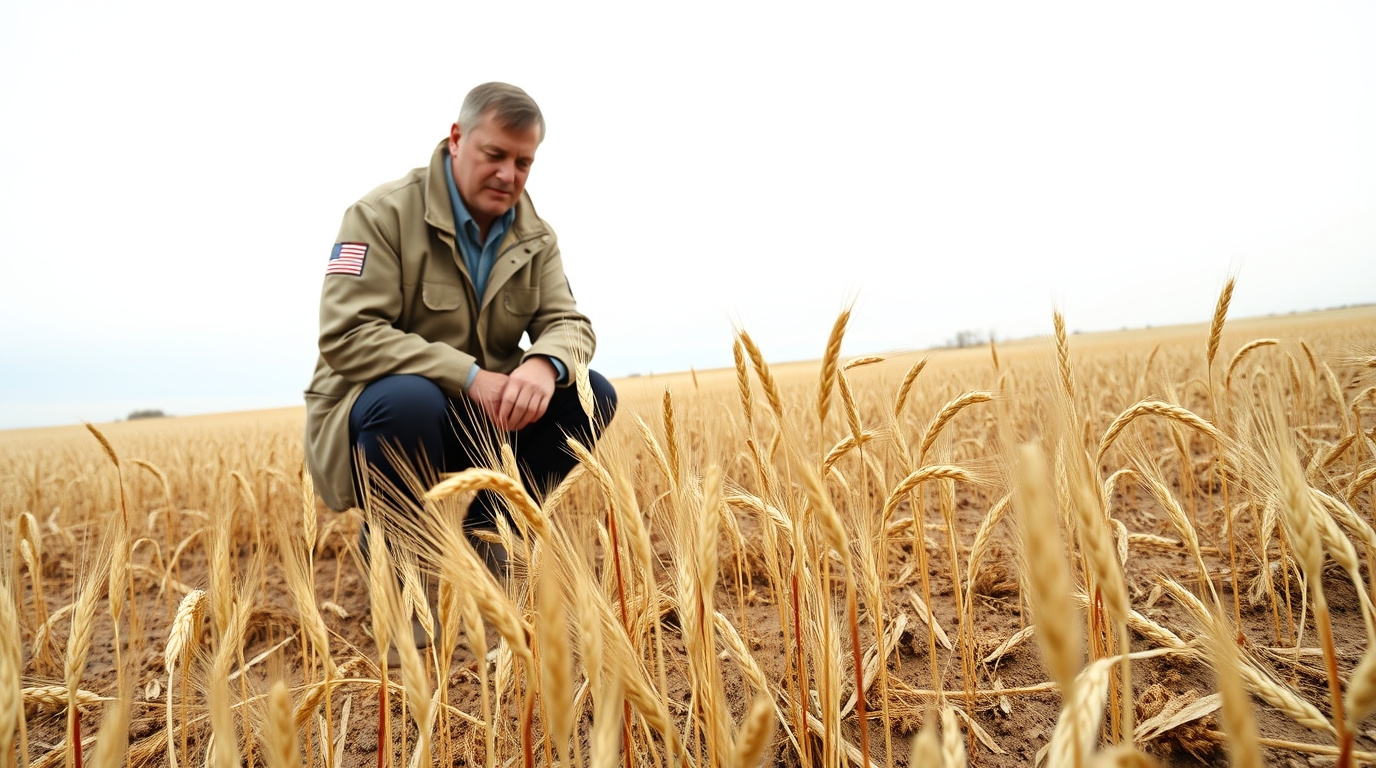
The most alarming data point in the first 2026 crop progress report was the winter wheat condition rating. Only 35% of the U.S. winter wheat crop was rated good to excellent as of April 5, a drop of 13 percentage points from the 48% recorded at the same time last year. Analysts polled by Reuters had expected a reading of 42%, making the actual figure a meaningful miss to the downside. USDA Meteorologist Brad Rippey described the opening of the 2026 growing season as looking “pretty rough” and noted that Texas had just endured its fourth-driest September-to-February stretch in the past 131 years of records.
The 2026 crop progress report shows winter wheat at its worst opening since 2022
The 35% good-to-excellent reading for winter wheat in the first 2026 crop progress report is the lowest initial spring rating for the crop since 2022. At the same time, 31% of the national winter wheat crop was rated poor to very poor, up from 21% a year earlier. The situation is most severe in the Southern Plains, where Texas, Oklahoma, and parts of Colorado have been under persistent drought since last fall. In Texas, more than half of the winter wheat was rated poor to very poor, consistent with field reports from the Panhandle and South Plains showing stunted plants with almost no chance of reaching harvest.
Colorado and Montana recorded the sharpest rating declines from any state tracked in the report, though partial offsets came from Idaho and Washington, where moisture conditions are more favorable. Nationally, 7% of the winter wheat crop had already reached the heading stage as of April 5 — in many drought-stressed Southern Plains fields, that is a stress response rather than a sign of progress, as plants rush to reproduce before they can develop the biomass needed to support a harvestable head. For the full field-level view from West Texas, Agroinformacion reported on how farmers near Plainview estimate only 5-10% of planted acres may ever reach harvest.
Corn planting is running slightly ahead of schedule in nine states
The corn data in the first 2026 crop progress report offered a more encouraging picture. Nationally, 3% of corn acres were planted as of April 5, one percentage point ahead of both the prior year and the five-year average. Texas led all states with 59% of its corn already in the ground, followed by Tennessee at 18% and Missouri at 8%. Nine of the top 18 corn-producing states had not yet recorded measurable planting progress, which is normal for early April when soils in the northern Corn Belt have not yet warmed sufficiently.
DTN Ag Meteorologist John Baranick noted that rainfall in the prior week had been significant across a large portion of the central U.S., improving soil moisture and drought conditions heading into the planting window. He said the improvement may have slowed some early fieldwork but that the moisture gain was worth the trade-off, particularly in states where drought has been a concern. The weather pattern was expected to remain active through the following week, with frontal systems and showers forecast for the Central Plains. USDA will not report national corn condition ratings until the crop has exceeded the 50% emergence threshold, which typically occurs around mid-May.
Spring wheat and cotton are also starting the season on track
Spring wheat planting stood at 2% nationally as of April 5, one percentage point behind the prior year but equal to the five-year average. Idaho reported 18% of its spring wheat planted, equal to last year’s pace but four points ahead of the five-year average. Washington was at 12%, one point ahead of last year but five points behind the historical norm. Cotton planting came in at 5%, one point ahead of the prior year. USDA noted that national conditions for corn, soybeans, and other summer crops will not be reported until those crops pass the 50% emergence threshold, typically mid-May for corn and early June for soybeans.
The first 2026 crop progress report sets the baseline against which all subsequent weekly updates will be measured through harvest. With winter wheat already showing significant stress and the active storm pattern introducing both opportunities and risks for spring planting, the next several weeks of reports will be closely watched by commodity markets, crop insurance adjusters, and farm lenders across the country. The original report data and analysis were published by Farm Progress on April 7, 2026.